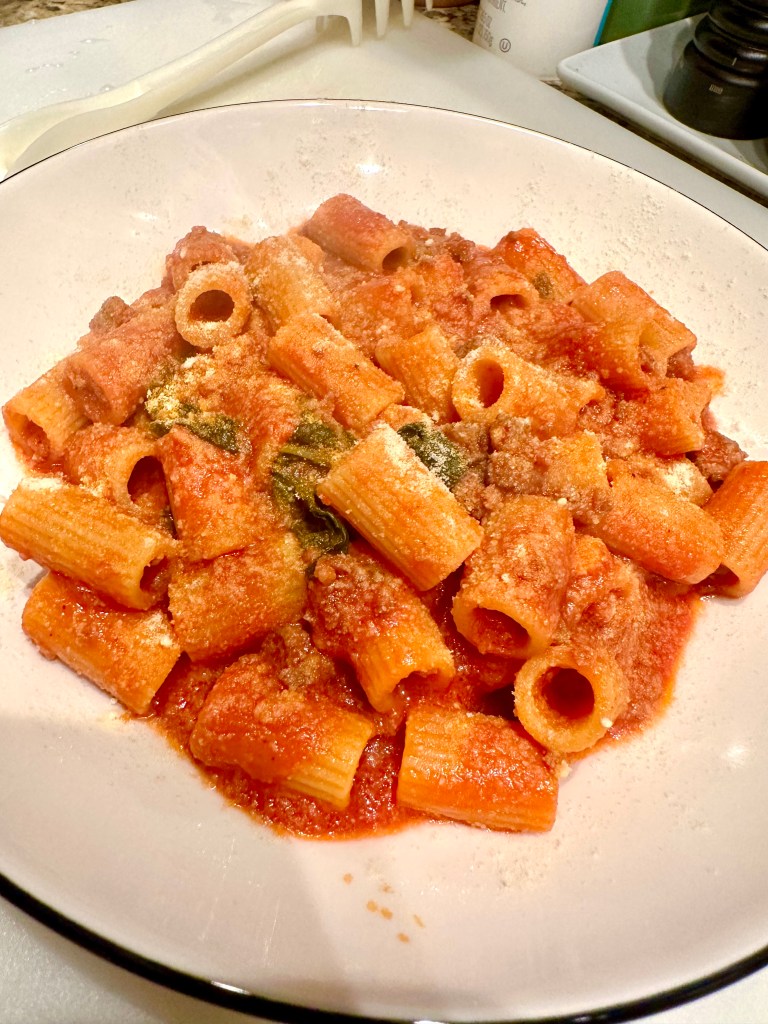
This is such an easy pasta to throw together and so rich and satisfying. Sometimes less is more and the basic ingredients can really sing when left to their own devices.
Ingredients:
6 Italian Sausages, cubed, seared and drained.
1 lb of Pasta, tube like rigatoni is ideal
2 Tbsp Olive oil 1/4 tsp Oregano 1 Onion, minced 1 Carrot, minced 4-5 cloves Garlic, crushed with side of knife. 1-24 oz bottle of Passata 1 Bay Leaf
Fresh Basil Pecorino Roman
Preparation:
Remove your sausage from its casing, and cube it, sear it in a pan until it starts to release some of its fat and break in into smaller pieces, then drain it.
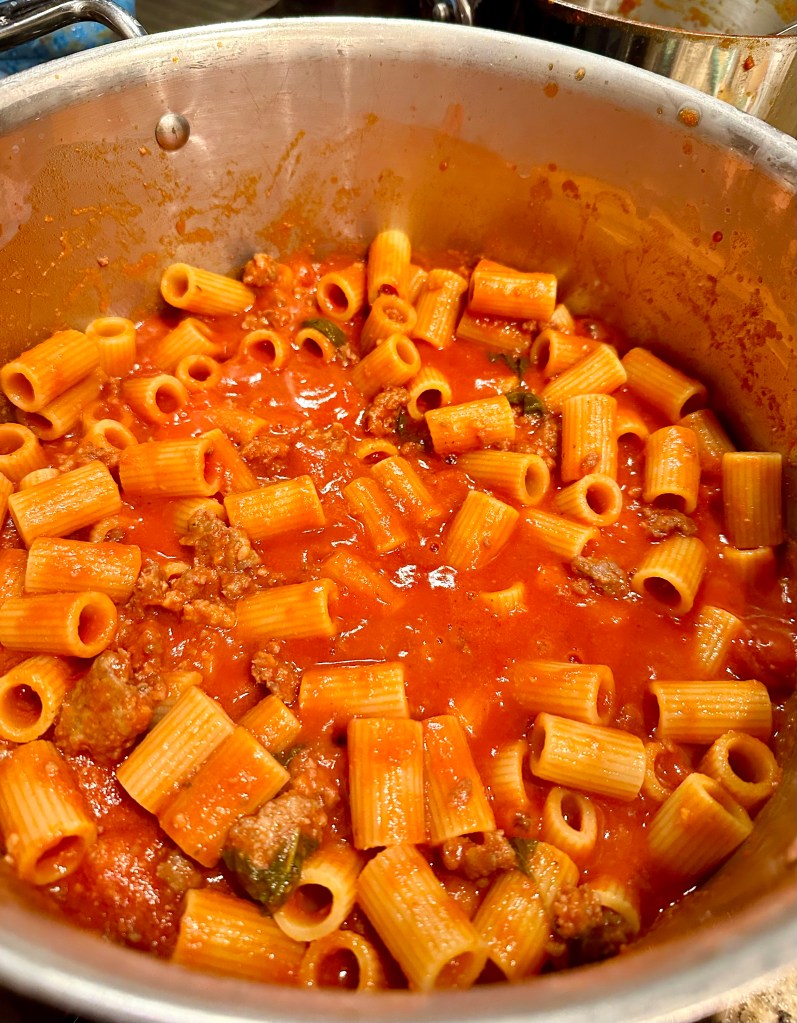
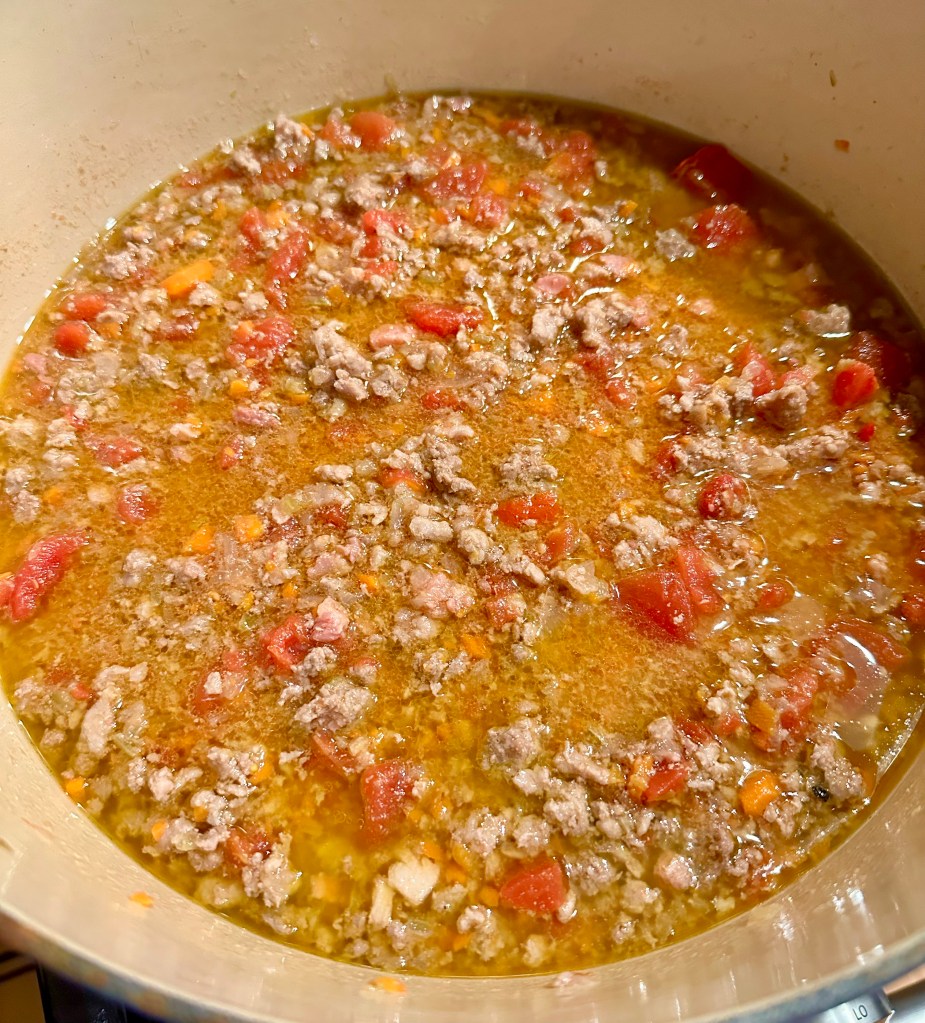
To the same pan add your onion and garlic, and allow it to sauté and soften. Add back the sausage and your passata, bay leaf, oregano and cook for at least one hour. Then add your fresh basil and allow it to continue cooking until the oil separates. I prefer to add the basil later, as I feel if it cooks too long it loses flavor.
Before you drain your pasta, remove about 1/2-3/4 of a cup of the pasta water. Drain your pasta and add it back to the pan with the reserved pasta water and allow it to finish cooking.
The addition of the pasta water really creates a silky sauce and will vastly improve the final dish. I find this to be true for most pasta dishes. I finished with grated Pecorino Romano cheese.
Marcella Hazan is the chef that taught me how to cook authentic Italian. She was tough and demanded authentic ingredients and no short cuts, but the recipes are timeless and still work today as well as they did 30 years ago. If you want one cookbook on Italian cooking, you can’t go wrong with her classic, “Essentials of Classic Italian Cooking”.
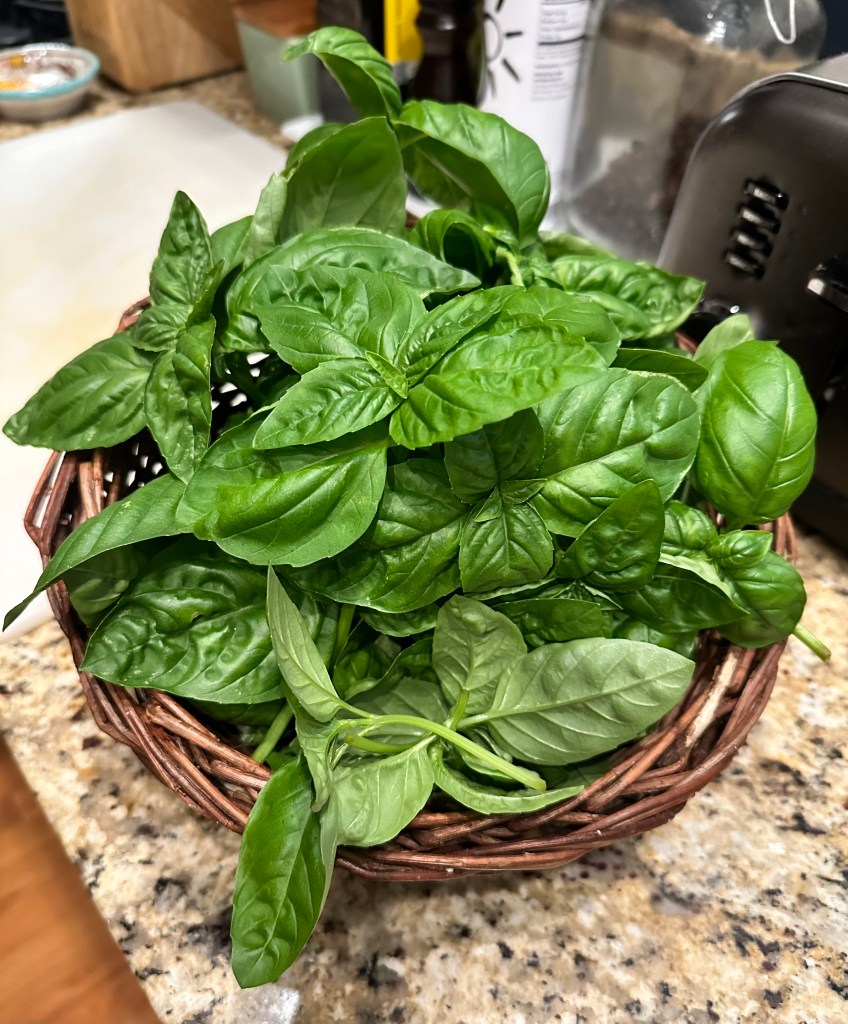
Summer is the perfect time to make pesto. With all the rain we’ve been having, my basil has been going crazy. There are many recipes for pesto, but I think Marcella gets the balance just right. I make a small change, because I’m not a huge fan of pine nuts. I’ve even seen authentic recipes from Genoa where they use walnuts, but I love pecans, so that’s my hack. Of course you can use whatever you prefer.
Additionally, while many pesto recipes do not use butter, I feel it gives a great flavor. It’s your choice. Finally, the mortar and pestle method is considered by many to be the best way to prepare pesto, but I have a method I use were I can use a mini prep processor and get excellent results. Again, your choice.
Ingredients:
1 lb Pasta, I think fusilli, orecchiette or farfalle work well, as the ridges catch the pesto.
2 cups Genovese basil leaves, tightly packed, no hard stems. 1/4 – 1/2 cup Extra Virgin Olive Oil, you’ll need the 1/2 if you choose to skip the butter. 2 cloves Garlic, crushed with flat side of your knife and finely minced 1/2 tsp Sea Salt 2 Tbsp Pecans or Walnuts or pine nuts if you like them.
3 Tbsp Butter 3/4 cup finely grated Parmesan 1/4 cup finely grated Romano
Preparation:
Before you begin, take you food processor bowl including blade and top and pop it into the refrigerator. This will help you from overheating the pesto.
Put the salt, nuts and garlic and 1/4 cup of olive oil into the food processor and pulse until you get a smooth consistency. Then add your basil in in batches, just pulsing gently until fully incorporated. Transfer into a bowl and fold in the butter and cheese by hand until the mixture is smooth and cover and put into the refrigerator. It can start to blacken if left on the counter.
Take your pesto out of the refrigerator. Start the water for pasta, once its boiling give it a heavy dash of salt. Add in your pasta. About 4 minutes before the pasta is done scoop out some hot pasta water and set aside.
Cook the pasta for another 2 minutes, drain and add the pasta back to the cooking pan. Add the pesto and a splash of the pasta water over very low heat and stir to coat the pasta for an additional 2 minutes. You may not need all of the reserved pasta water. Serve with additional cheese as desired.
A roux is the fundamental base for many Continental classic sauces and is essential in Cajun and Creole cooking. It is a wonderful way to thicken a sauce and is easy to make. The one key to a roux is that the flour must be cooked long enough for the flour to lose its raw taste.
There are four basic types of roux:
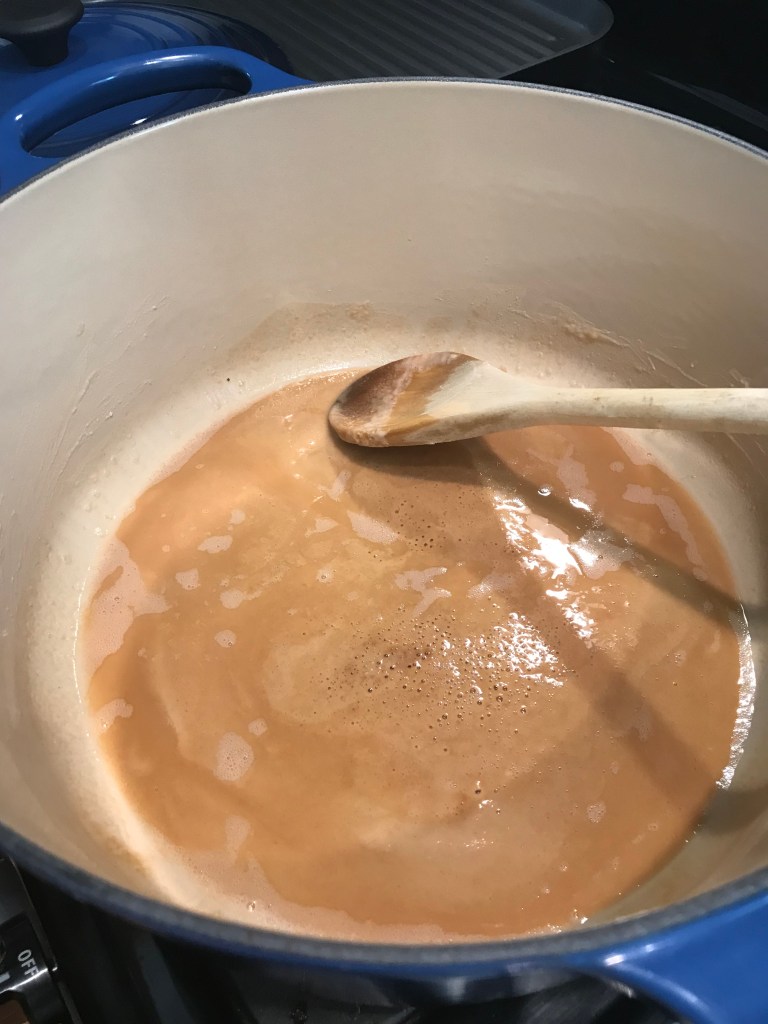
White- Only for the most delicate sauces, primarily used in French or Italian cuisine.
Light Brown- For delicate dishes like soups (bisques), or as an addition to a sauce.
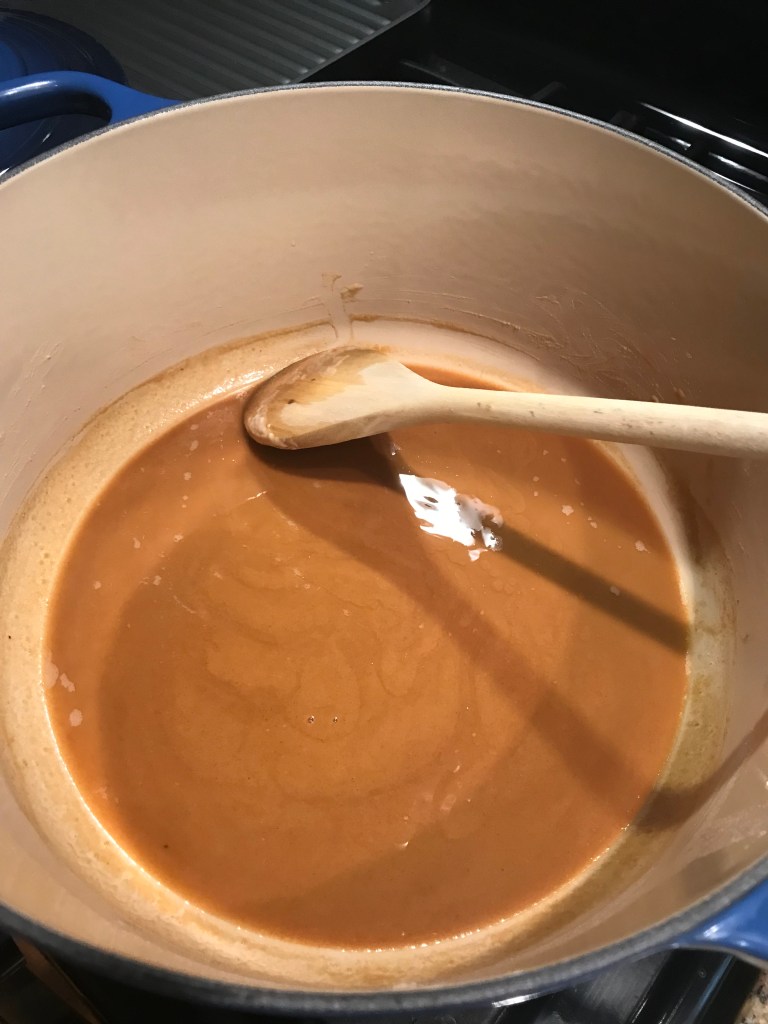
Medium – For most poultry and seafood dishes. It’s the color of light milk chocolate.
Dark – For smoky dark gumbos for wild game, turkey or really any meat if you like that smoky flavor. It’s the color of dark chocolate.
This is just when you start cooking the roux. This would be considered a white roux. If you look below, you will see a light roux and below that a medium roux and then the final dark roux.
Ingredients:
1 cup of vegetable oil or butter, but not olive oil.
1 cup of flour, all purpose
Note: If you don’t need this much roux, just use less ingredients, but keep the equal parts ratio.
Preparation:
In a heavy sauce pan or Dutch oven and turn the heat onto medium. Let it heat for a few minutes and then add the oil and allow it to heat for a few more minutes. This is my trick to allow the oil to heat first, as I find that this can allow you to make a perfect dark roux in as little as 30 to 45 minutes. If you are using butter, skip this step as the butter has a tendency to burn.
Now add the flour and stir with a figure eight motion for as long as you need, to reach the darkness of the roux you need. I like to use a wooden spoon to make my roux, and the only key at this point is don’t stop stirring or it will burn.
If the mixture is cooking too fast and starting to burn, turn down the heat. Roux will burn in an instant, and once burned is not salvageable.
This sauce is packed with flavor. The roasted peppers complement the Italian sausage well. I like to use a mix of peppers, but I find that green bell peppers are too bitter, so I omit them.
The only slightly time consuming part is the prep of the peppers, but if you do a few extra, you can use them for multiple dishes like salads and sandwiches.
Ingredients:
3 Bell Peppers, red, yellow and orange
2 Tbsp Olive oil
Oregano
6 Italian Sausages, mild or spicy, cubed, seared and drained.
1 Onion, minced
1 Carrot, minced
1 stalk Celery, minced
4-5 cloves Garlic, crushed with side of knife.
1 24 oz bottle of Passata
1 Bay Leaf
Pecorino Romano
Preparation:
Preheat your oven to 375°F, cut your peppers in half, and take away the stems. Place them on a baking sheet with parchment paper skin side down and brush them with olive oil and sprinkle them with salt, pepper and a pinch of oregano. Bake them until well roasted. It usually takes about 35 to 40 minutes. Remove them and allow them to cool.
Remove your sausage from its casing, and cube it, sear it in a pan until it starts to release some of its fat and then drain it.
To the same pan add your onion, carrot, and celery and garlic, and allow it to sauté and soften. This is your soffritto.
Add back the sausage and your passata and bay leaf and cook for at least one to two hours.
Serve with pasta of your choice, but tube pasta is a good option. I finished with grated Pecorino Romano cheese.
This is the kind of comfort food that I really enjoy cooking. It is the kind of food your Nonna would make on Sunday, and it is both comforting and very tasty.
It takes a little prep time, but I find the end result really satisfying. It’s still amazing to me how such simple ingredients can transform into something so incredibly good. And, they are wonderful the next day, if they last that long.
Ingredients:
1 12 oz box of Jumbo Pasta Shells 2 Egg Yolks 1 Egg 1 Package of Ricotta Cheese 1/2 cup Parmesan Cheese, grated. 2 cups Mozzarella Cheese, grated. 1/4 cup Parsley, chopped. Freshly grated Nutmeg, just a bit, or a pinch. 1/8 tsp Oregano 3-4 cups Marinara, good quality store bought is fine, but feel free to make your own if you’re inspired.
Preparation:
Begin by boiling water in a large pot, once the water is boiling, salt it generously and add the shells. Give it a soft stir, but don’t disturb the shells too much. Timing is critical here, because if you over cook the shells, you will have a mushy mess.
Follow the package directions and cut the highest time by half and start tasting for doneness at that point. Example, the package of shells I used said 10-13 minutes. I started tasting at 7 minutes. Had I cooked them for even 10 minutes, they would have been too soft. I found 9 minutes was perfect.
When they are cooked very al dente, pour them into a colander and rinse them well with cold water. Separate them with your fingers and continue to rinse until they are cool. As they are rinsed, they will not stick together.
Beat together your two egg yolks and your egg and them fold in the ricotta, Parmesan and mozzarella. Add in salt, pepper, parsley and nutmeg. Put this mixture into a gallon freezer bag and twirl the bag to make a piping bag, then cut a 1/2 inch corner off the end to fill the shells.
Put about 1 1/2 cups of you marinara on the bottom of your baking dish and then take each shell and pipe in the ricotta mixture. Squeeze the shells slightly and lay them next to each other in the dish.
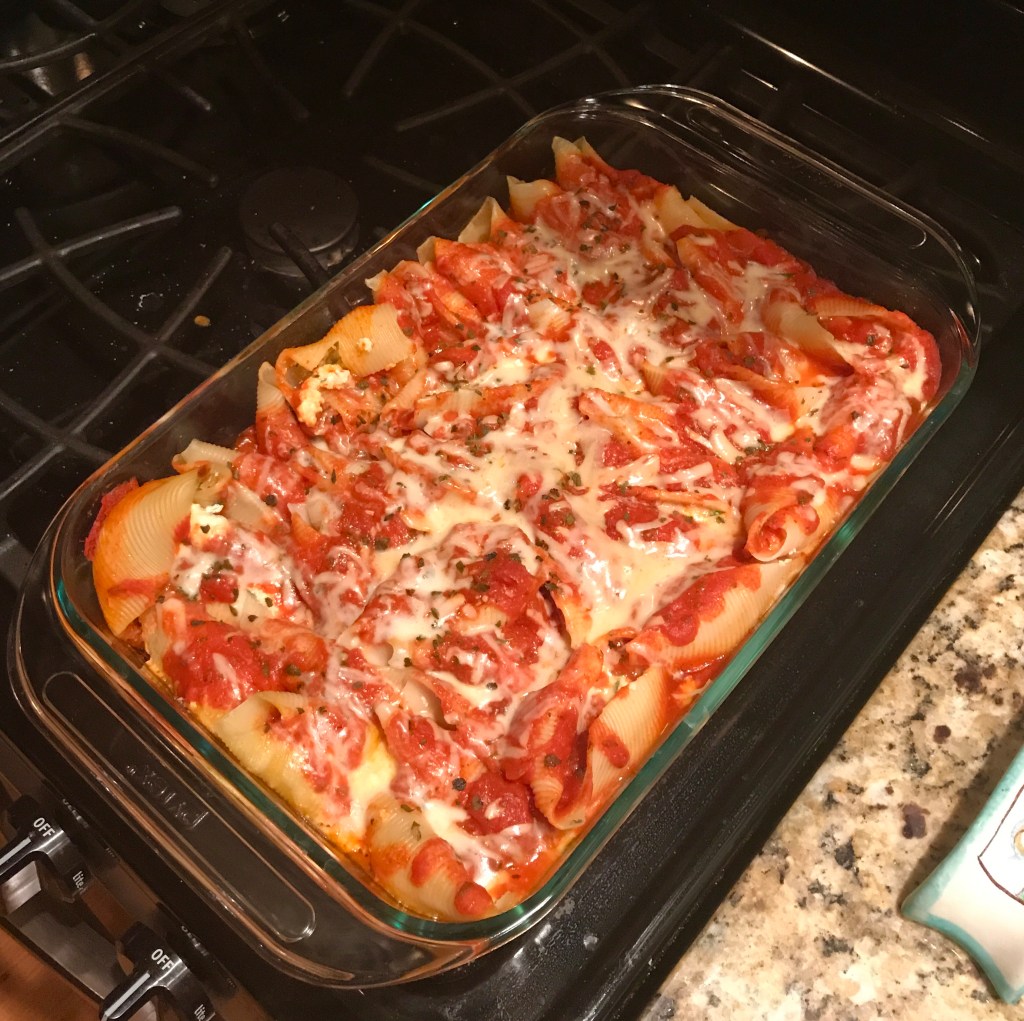
When all the shells have been filled, or you are out of room, sprinkle on the oregano, add the rest of the marinara and add more Parmesan and or mozzarella cheese. Cover tightly with foil and into a 375F oven for 35-40 minutes. Cook until it is bubbling. Remove from the oven, uncover and let it rest for 5 minutes and serve.
Regular readers will know my love for Italian food runs deep, especially for the true comfort dishes practiced and perfected in kitchens by generations of nonnas (Italian grandmothers).
Sunday is a special day when the family comes together for a big meal and while each family has their own traditions of which dishes are served. In the US, the tradition of the Sunday Sauce is essential.
While this is a marinara base, the key is the slowly braised meats which flavor the sauce and then impart a flavor to the sauce that is beyond delicious. You can also add braciole, lamb necks and/or veal knuckles etc, but this is optional. Bottom line, if you cook anything in a tomato sauce for 4 hours, it will come out great.
The key, as with all comfort food, is to use the best ingredients, take your time and layer the flavors. Here is what you will need.
Ingredients:
Meatballs:
½ lb ground Beef
½ lb ground Pork
2 Tbsp Grated Romano Cheese
2 Tbsp Breadcrumbs, I like panko breadcrumbs or plain.
1 Egg, beaten
1 tsp Lawry’s Seasoning Salt, this is my secret weapon for killer meatballs.
Sauce:
5 Italian Sausages, sweet/hot or both, cut in half.
1 or 2 Beef Short Ribs, depends on size. Try to find them around 3 to 4 inches; the larger ones do not fit in the pan well. You can also have the butcher cut them in half.
1 or 2 Pork Ribs, country style is good. Same size as above.
3 Tbsp Olive Oil
4 cloves of Garlic, smashed with side of knife and loosely chopped
1 cup finely diced Onion
½ cup finely diced Carrot
½ cup finely diced Celery
¼ cup Marsala Wine
2 – 28 oz cans of whole San Marzano Tomatoes, puréed in a food processor or crushed by hand.
1 Tbsp Salt
Black Pepper
Preparation:
First, prepare your meatballs by combining all ingredients. Start with the meat, then salt and cheese, work it together then add your beaten egg and gently work the mixture and lastly add your breadcrumbs 1 Tbsp at a time until it comes together. Roll into 2 inch diameter meatballs or whatever you prefer and put into the refrigerator.
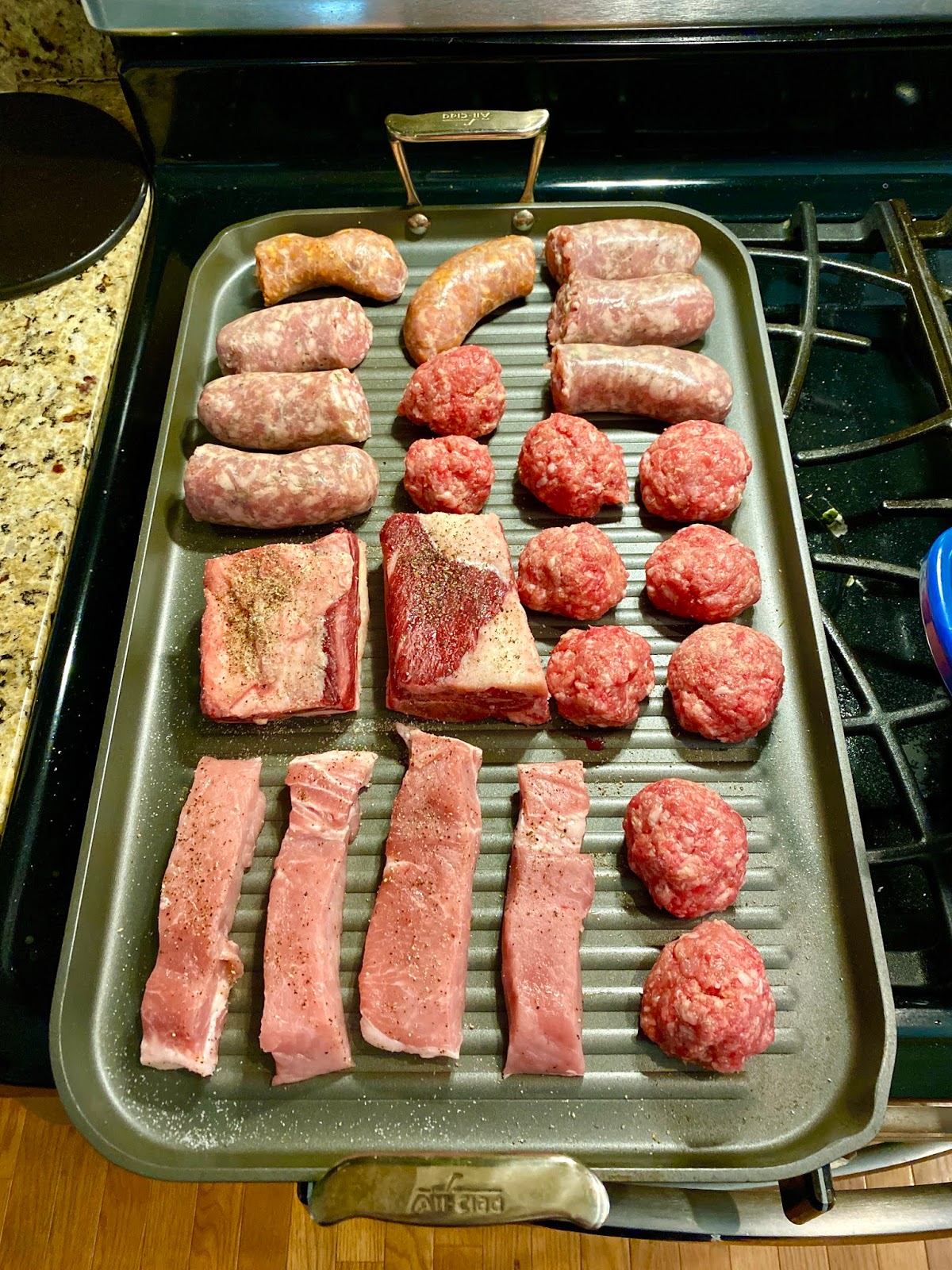
Preheat your oven to 375F/190C. Take your beef and pork ribs and salt and pepper both sides and put onto a foil lined baking sheet or directly on a griddle, then place the prepared meatballs and sausages onto the same sheet and bake for 25-30 minutes.
To make your sauce, start with a large heavy duty saucepan, which will hold the heat and give you a consistent low simmer. A cast iron Le Cruset is perfect. Larger is better, as you don’t want to crowd the meat.
Heat the olive oil and sauté the garlic, onion, carrot and celery. Stir frequently and make sure to add ½ of the salt and some pepper to the mixture.
When it is sautéed and translucent, add your Marsala wine and cook until the wine is gone (about 3-4 minutes), then add the tomatoes and bring up to a soft simmer.
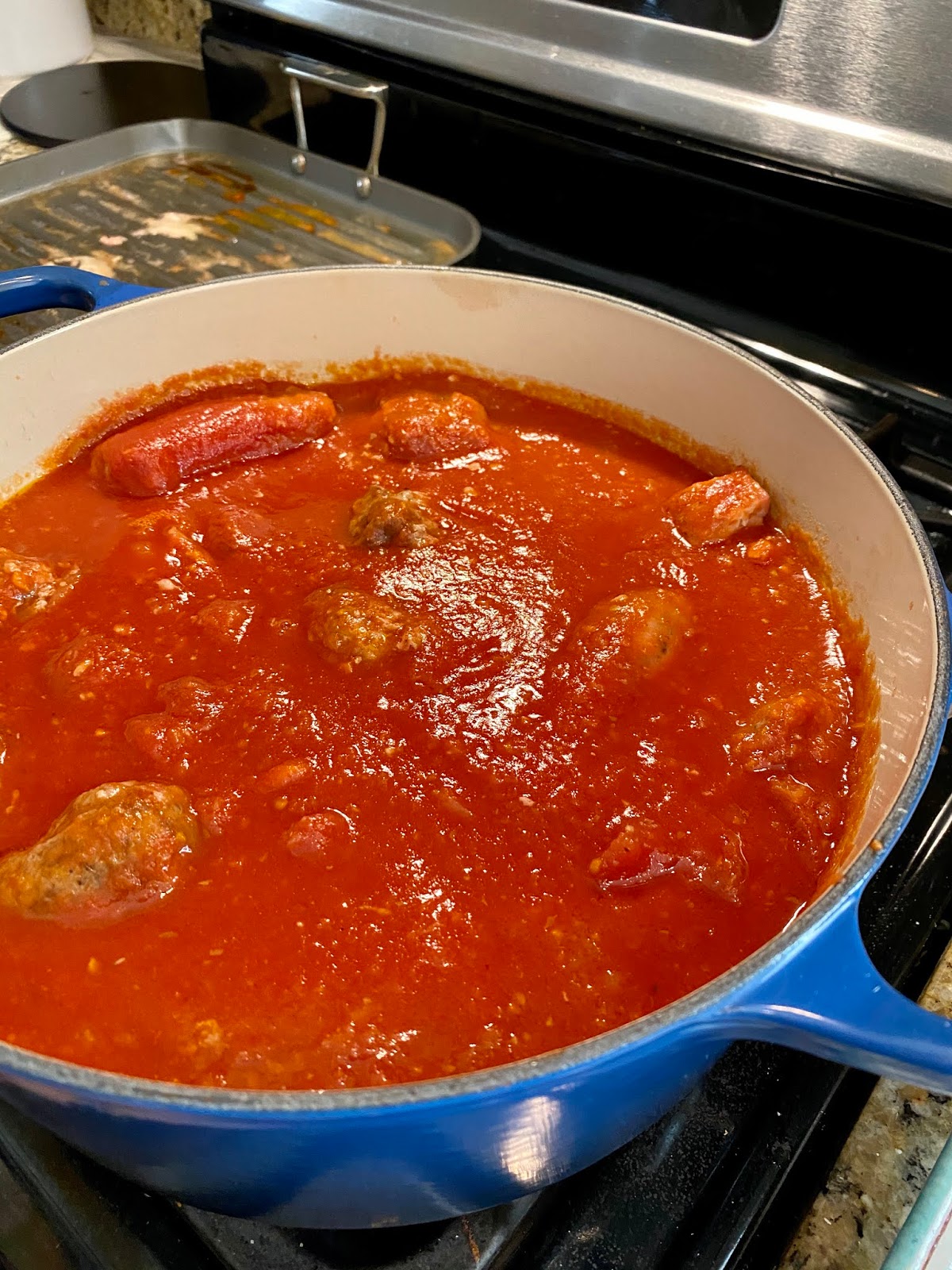
Once the meat is finished, gently add it into the sauce, add the rest of the salt and softly simmer uncovered for 4 hours or longer, stirring occasionally.
Serve over your choice of pasta with grated Romano and Parmesan cheese. Optionally, you can remove the meat and serve it as a separate meat course after the pasta course.
There are many versions of this classic sauce, which originates in Bologna. Some use wine, some use milk, some use wine and milk and some only use a bit of tomato paste, but this is my tried and true version. It is epic, but it is definitely not fast food.
In my recipe, the order of the ingredients is important. Make sure to add the milk before the wine. And remember this is slow food. It’s always on simmer. Set aside at least 5 hours of cooking time, or even a bit more. The smell will tell you when its ready
A quick read through the recipe prior to beginning is a good idea.
Ingredients:
3 Tbsp Extra Virgin Olive Oil
2 Tbsp Butter
1 large Carrot, finely diced
1 large Onion, finely diced
1 stalk Celery, finely diced
1/4 cup Pancetta, finely diced
1 lb Beef, ground
1 lb Pork, ground
1 cup Whole Milk
Nutmeg, freshly grated
Salt and Black pepper
1 cup (235ml) white wine
1 – 28 oz. (800g) canned whole peeled tomatoes, crushed or pulsed. I like to crush them with my hands.
Preparation:
Add your butter and olive oil, and bring it up to a medium simmer, then add the pancetta, and allow it to gently release its fat, then add the beef, and then add the pork. You’re going to cook each of the meats until they just lose their rawness. A little pink is okay. At this point a little bit of salt and a little bit of pepper is good.
Then add your whole milk, and a few gratings of fresh nutmeg, and gently simmer it until the milk is almost gone. Then, you will add your wine and gently simmer until it is almost gone.
Now add your tomatoes and gently simmer for 5 + hours. Be careful to avoid sticking. If it gets too thick, you can always add a little bit of water. This is where a cast iron heat diffuser comes in very handy.
When it’s finished, you will serve with fresh egg pasta, like tagliatelle or pappardelle and a little bit of Parmesan Reggiano.
If you can’t find fresh pasta, a quality dried egg pasta is perfectly fine. Remember not to overload the pasta, as this is a rich sauce and you want to taste the pasta as well.
Note: This makes a lot of sauce, so divide it up and freeze it. It freezes well. I like to let it defrost in the fridge and then gently reheat with a tiny bit of water.
This was a speciality of Florence’s in Boston’s North End. Sadly Florence passed away and the original restaurant closed in 2015. I like the idea of keeping the dish alive. I’ve heard they’ve reopened as the Florentine Cafe.
After I moved away from Boston, I tried to recreate Florence’s recipe, and I think this is very close to the original. This sauce can be made thicker and more concentrated by just using one can of tomatoes. It’s your choice.
½ lb. Pancetta (Italian Slab Bacon), either cut into ¼ inch cubes or ¼ inch strips
2- 28 oz. cans of crushed Tomatoes, or whole tomatoes that are lightly chopped in the processor. San Marzano’s are the best.
3 tsp. Red Pepper flakes or a few whole red chili peppers – Optional
2 Tbsp. Butter
Few grindings of fresh Nutmeg
Salt and freshly ground Black Pepper
Grated Romano and/or Parmesan Cheese Pasta of choice. Bucatini is traditional, but I use penne.
Preparation:
Melt the butter over medium heat, and add the pancetta. After the pancetta starts to release it’s aroma and renders down, add the onion, garlic, and cook until translucent.
Now add the nutmeg, red pepper flakes and the salt and pepper. You want to just let the mixture sauté gently until it smells fantastic, usually about 5 to 10 minutes over medium heat.
Then add the tomatoes, bring it back to a simmer, and let it slowly cook. After 1 to 2 hours, you will have an amazing rich sauce, which is perfect with any tube pasta. Florence always served it with penne, so I do the same.
Before you add the sauce, always sprinkle your grated cheese over the drained pasta, toss and then add the sauce and toss again, and then add more Parmesan cheese. Tossing is the key to a well-made pasta dish.










 The Louisville Chef