Baingan “Eggplant” Bharta

This is a very comforting Northern Indian dish and very tasty, with so many layers of flavor. It’s a popular dish in many Indian homes. The charring of the eggplant before being baking is really key to getting that smoky flavor. If it’s more convenient, the charring and roasting can be done the day before. 

A pan filled with a rich, textured tomato-based sauce, featuring ground ingredients and topped with bright red chili peppers.

Ingredients:

2- Eggplants, prepared as described below, see note. 

3 – 4 Tbsp of Oil or ghee.

1- Onion

4-5 cloves Garlic, minced

3-4 inch piece Ginger, peeled and minced. 

1-2 cups chopped Tomatoes, I like cherry tomatoes sliced in half. 

1 tsp Coriander Seeds, freshly ground. If you don’t have a spice grinder then substitute 1/2 tsp of pre ground.

1 tsp Turmeric 

1 tsp Cumin Seeds, freshly ground. If you don’t have a spice grinder then substitute 1/2 tsp of pre ground.

1 tsp Garam Masala 

1-2 tsp Kashmiri Chili Powder, or sub with 1 tsp Cayenne Pepper Powder. 

1 Tbsp Fenugreek Leaves

1 tsp Sugar

Preparation:

Preheat the oven to 425 degrees. While the oven is heating, take the eggplants and prick them all over. This is essential so they will not explode when you cook them. Turn on a gas flame and brown the eggplant skin on all sides, turning them frequently. A pair of tongs makes this very easy. This will take about 5-8 minutes, but keep a close watch on them.

After they are well browned, put them onto an aluminum foil or parchment lined baking sheet and into the preheated oven for approx 45 minutes or until they are wrinkly and soft. Allow to cool and scrape out the flesh and set aside. 

Two charred eggplants resting on a baking sheet lined with parchment paper, showcasing their smoky exterior.

Make your paste by adding the onion, garlic and ginger into a mini blender/ food processor. Grind it in stages until it’s a smooth paste. You can also finely chop them if you don’t have a mini blender. 

Sauté your onion, ginger garlic paste in 3 to 4 tablespoons of oil. Cook it until the harsh smell is gone. 

Then add your ground spices and cook them gently until they smell fragrant. Add your tomatoes and cook until the mixture thickens slightly. 

Adding your chopped eggplant, sugar and fenugreek and simmer until the eggplant is fully cooked. If the mixture seems too thick, just add some water. A good sign that the dish is ready is when the oil separates from the sauce.

Serve over basmati rice. 

Note: If you don’t have a gas range, you can approximate the charring under a broiler by turning the eggplant until well charred and then finish baking in the oven.

Khoresh-e Loobia Sabz – Chicken and Green Bean Stew

A pot of khoresh, a Persian stew, simmering with chicken, green beans, and tomatoes in a rich sauce.

Persian cuisine is a world class tradition that deserves more recognition. While I don’t believe its diverse flavors and styles are as widely known as they should be, this classic khoresh offers a perfect introduction. It’s a foundational dish instantly recognizable to any Persian family and one of my personal favorites, refined over many years.

Ingredients:

1 lb boneless skinless Chicken Thighs. 

3 Tbsp Vegetable Oil, I like avocado oil. 

1 lb Green Beans, ends removed, cut into 2-inch pieces

1 large yellow Onion, finely chopped

3 large Garlic cloves, minced

1 cup Tomato sauce or Passata

1 cup sliced Cherry Tomatoes 

1-2 Tbsp Tomato Paste 

1 Tbsp Fenugreek leaves 

1/2 teaspoon Turmeric powder

1/4 teaspoon Cumin powder

1/4 teaspoon Cinnamon

1/4 teaspoon Cayenne Pepper

2 tablespoons fresh Lime juice

Salt and pepper to taste

Preparation:

Heat 2 tablespoons of oil in a large saucepan over medium heat, add the chopped onion, saute until soft. 

Add the minced garlic and saute for another 2-3 minutes. Add turmeric, stir well. Add the chicken pieces, salt and pepper, cumin, and cayenne pepper, cook until the chicken is no longer pink.

Add the chopped tomatoes, the tomato sauce and fenugreek, mix well. Add enough water or broth to cover. Add tomato paste and bring to a gentle boil for a few minutes. Reduce the heat, cover, and cook on low heat for 45-50 minutes.

In the meantime, in a large frying pan sauté the green beans lightly for a couple of minutes in 1 tablespoon of oil over medium heat. Add the beans to the pan, add cinnamon, the lime juice, add additional hot water if necessary, taste, and adjust the seasoning. Cover and cook for another 15-20 minutes on low heat until the chicken pieces and green beans are tender, most of the water evaporated and the tomato sauce thickened. If you feel it is not as thick as you’d like, you can simmer it uncovered for this last 15-20 minutes.

Serve with steamed basmati rice or tahdig.

Rigatoni with Sausage and Basil

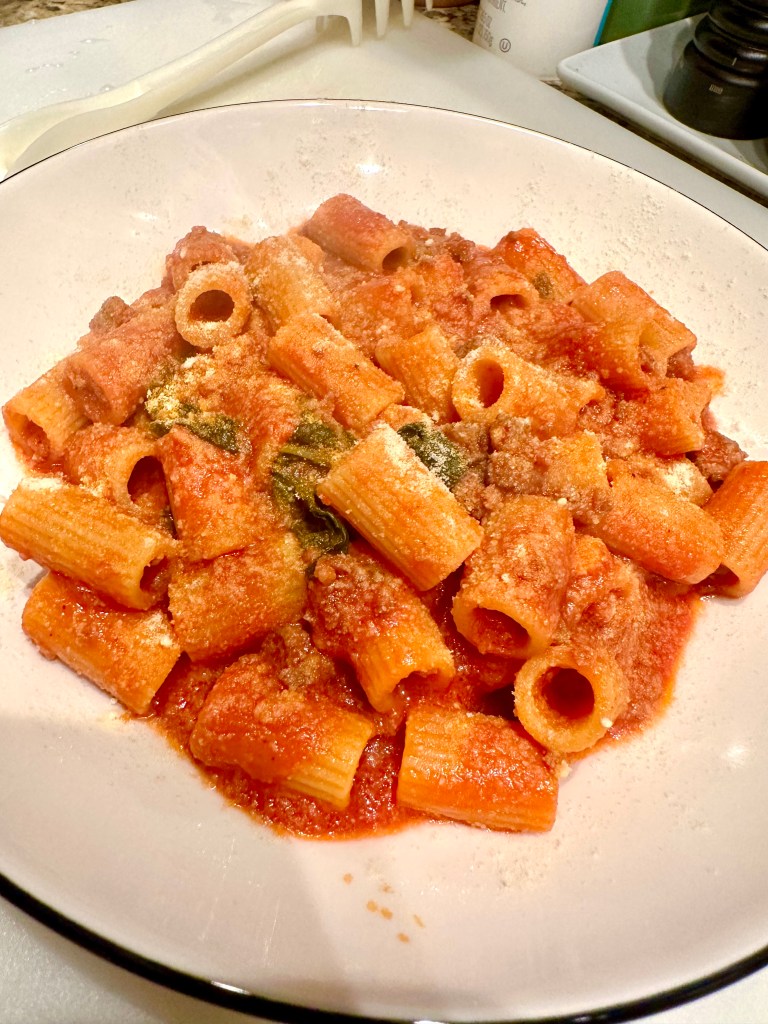
This is such an easy pasta to throw together and so rich and satisfying. Sometimes less is more and the basic ingredients can really sing when left to their own devices.

A bowl of rigatoni pasta topped with a rich tomato sauce, sprinkled with grated Pecorino Romano cheese and garnished with fresh basil.

Ingredients:

6 Italian Sausages, cubed, seared and drained. 

1 lb of Pasta, tube like rigatoni is ideal

2 Tbsp Olive oil
1/4 tsp Oregano 
1 Onion, minced
1 Carrot, minced
4-5 cloves Garlic, crushed with side of knife. 
1-24 oz bottle of Passata 
1 Bay Leaf

Fresh Basil 
Pecorino Roman

Preparation:

Remove your sausage from its casing, and cube it, sear it in a pan until it starts to release some of its fat and break in into smaller pieces, then drain it. 

To the same pan add your onion and garlic, and allow it to sauté and soften. Add back the sausage and your passata, bay leaf, oregano and cook for at least one hour. Then add your fresh basil and allow it to continue cooking until the oil separates. I prefer to add the basil later, as I feel if it cooks too long it loses flavor.

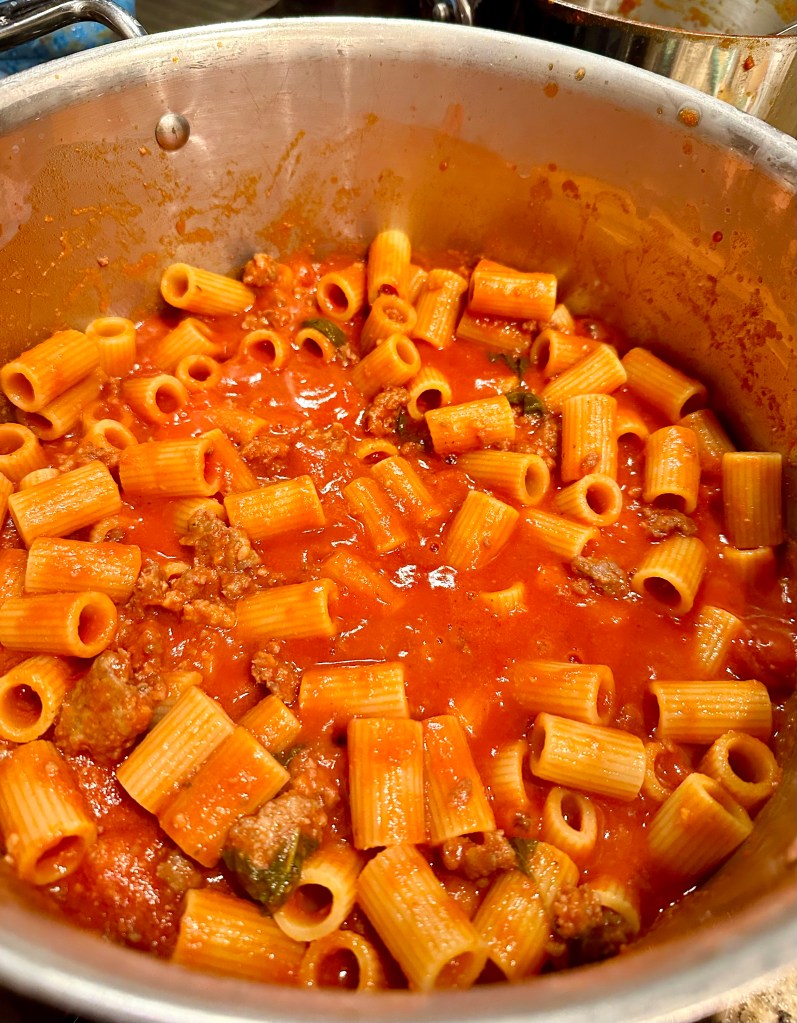
A pot filled with rigatoni pasta mixed with Italian sausage in a rich tomato sauce, garnished with fresh herbs.

Before you drain your pasta, remove about 1/2-3/4 of a cup of the pasta water. Drain your pasta and add it back to the pan with the reserved pasta water and allow it to finish cooking.

The addition of the pasta water really creates a silky sauce and will vastly improve the final dish. I find this to be true for most pasta dishes. I finished with grated Pecorino Romano cheese.

Beef Bourguignon

A classic of the French bistro menu. It’s the food your grandmere would make. Some recipes are very complicated, but if you strip it down to the essential elements, it’s manageable. 

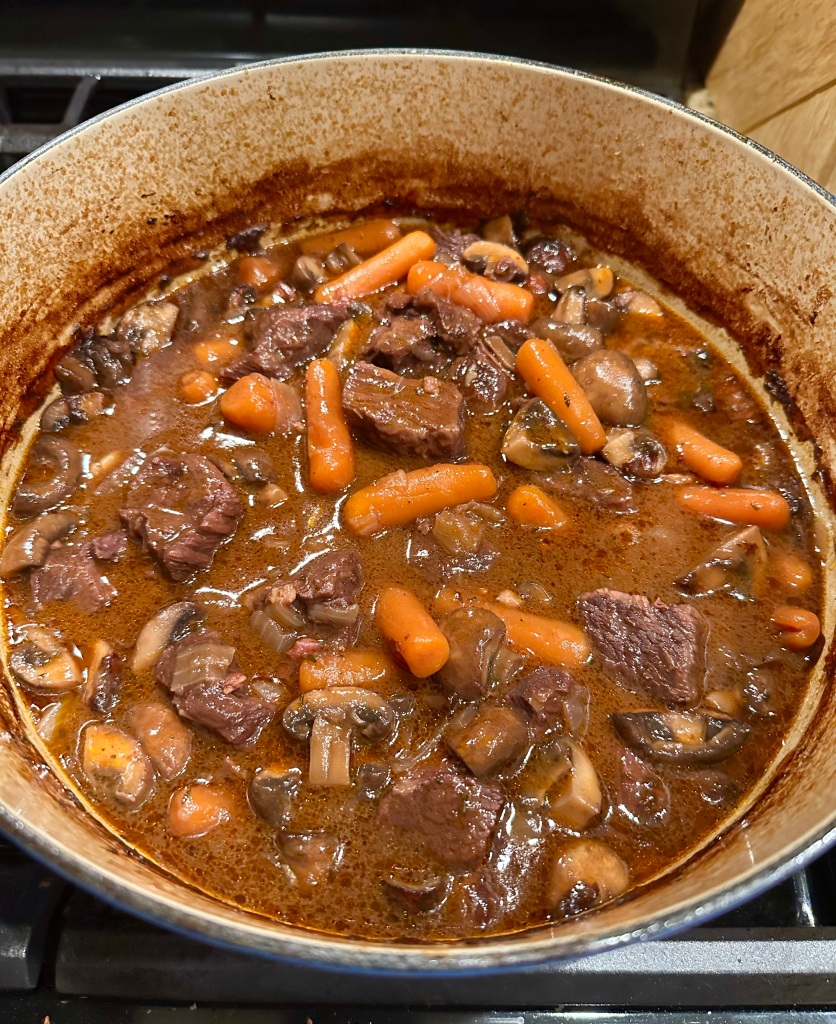
A pot of beef stew featuring chunks of tender beef, orange baby carrots, and whole mushrooms cooked in a rich red wine sauce.

I like Julia Child’s classic recipe, but wanted to streamline it. This is a very good adaptation. I used to make it without adding the mushrooms and pearl onions later, but it really does taste better with that extra step as it really layers the flavor.

Ingredients 

4- 5 lbs Beef Chuck cubed

1 bottle Red Wine, Pinot Noir is ideal. 

2 Tbsp Oil

1/3 lb Bacon, pancetta or pork belly.

1 Onion, sliced

2 cups Baby Carrots 

2 cloves Garlic, smashed

1 Shallot, sliced

Salt and Pepper 

2 Tbsp Flour

1 Tbsp Tomato Paste

2 tsp Thyme, dried. 

2 Bay leaf

1 1/2 cups Pearl Onions, peeled, left whole 

4 cups Mushrooms, left whole if small. 

Preparation:

Prep your meat and pour in your bottle of wine and allow to marinade 8 hours up to overnight. Drain the meat, pat the meat dry, reserving the wine. 

Blanch the bacon or pork belly in simmering water for 15 minutes, drain, remove and pat dry. This is only really necessary if the bacon is smoked. Using pancetta will eliminate this step. 

Heat the oil and render down the bacon and remove from the pan with a slotted spoon.

Preheat oven to 325F/163C. Salt and pepper the beef cubes and sear on all sides and remove from the pan and set aside. 

Add in the sliced onions, baby carrots, garlic, shallots and cook until slightly softened. Add in the flour and stir until incorporated and it takes on a slightly golden color. You want it to lose its rawness. 

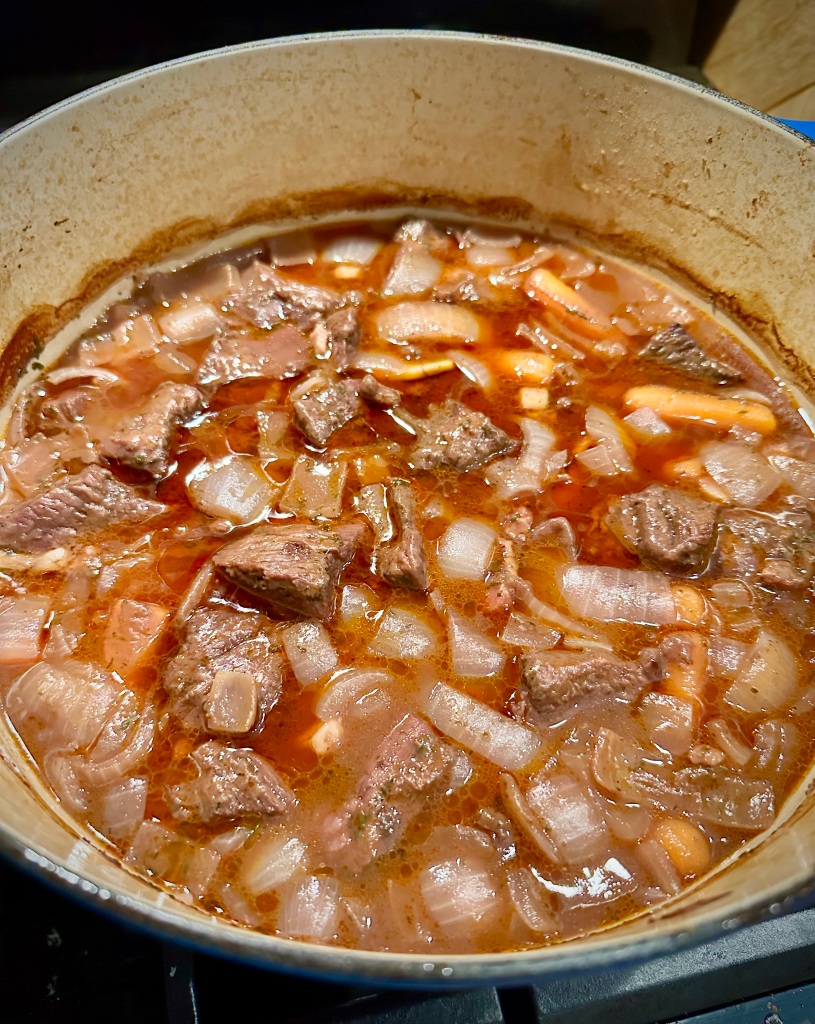
Then add bay leaves, thyme, tomato paste and the retained red wine. Stir and incorporate and then add back the beef and bacon. Cook covered in the oven, for 3 hours. 

A pot of beef stew with chunks of beef, diced onions, and a rich red wine sauce.

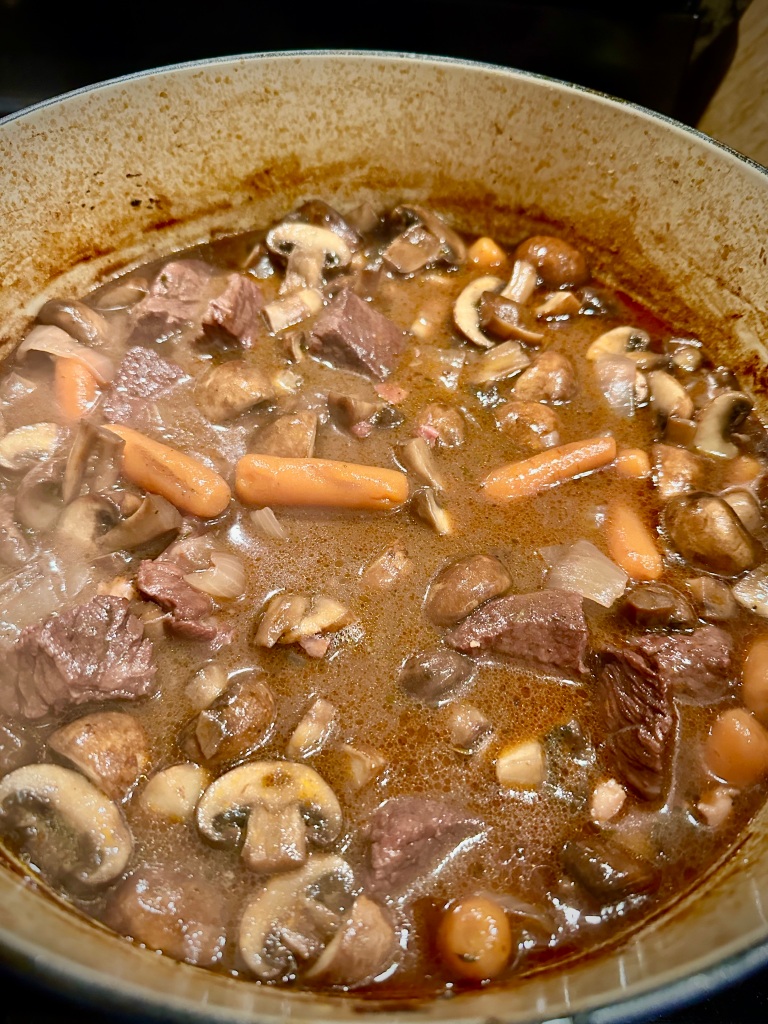
After 3 hours sauté the mushrooms and pearl onions in a tablespoon of butter, until they begin to caramelize, then remove the beef from the oven and add them into the pot and continue cooking uncovered for another hour.

A pot of beef stew with chunks of beef, mushrooms, and baby carrots simmering in rich brown sauce.

Serve with potatoes, French fries or noodles. 

Basic Quiche/Tart Recipe

This is a basic recipe that has so many variations. It really can be so many different things. I find it’s handy to use up the bits you have in the fridge. 

I’ve made it with leafy vegetables, leeks, onions, smoked salmon, ham, bacon, and all sorts of other vegetables and many different cheeses.

Ingredients:

1 Piecrust, either home made or store bought. Not deep dish. 
1- 3/4 cup chopped filling of choice. Meat, seafood or veggies. 
4 Eggs
1 cup Heavy Cream, or Whipping Cream or Half and Half
5 oz of Roquefort, Gruyère , goat or other cheese, cubed into ½ inch pieces 
Salt and pepper to taste
Parchment Paper
Dried beans, approx 2 cups
1 Tbsp fresh chives, chopped

Preparation:
Begin by blind baking the crust. Preheat the oven to 375F/190C degrees, use a fork to gently prick the crust on the bottom and on the sides.

Cut a piece of parchment paper so it overlaps the crust slightly and lay it onto the unbaked crust, and fill with dried beans. Push them so you have more beans on the sides and less in the middle. Then bake for 10-15 minutes.

After baking, remove the crust and lift off the parchment paper and beans. The beans will be hot, so handle with care.

Drop the oven down to 350°F/176C and prepare your filling by beating your eggs and gently incorporating the cream. Add your salt and pepper, remembering that depending on the cheese, it can already be quite salty. 

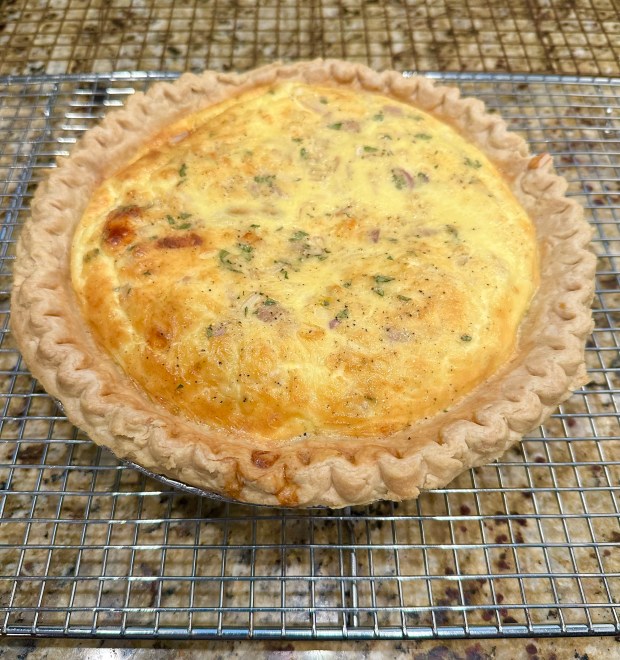
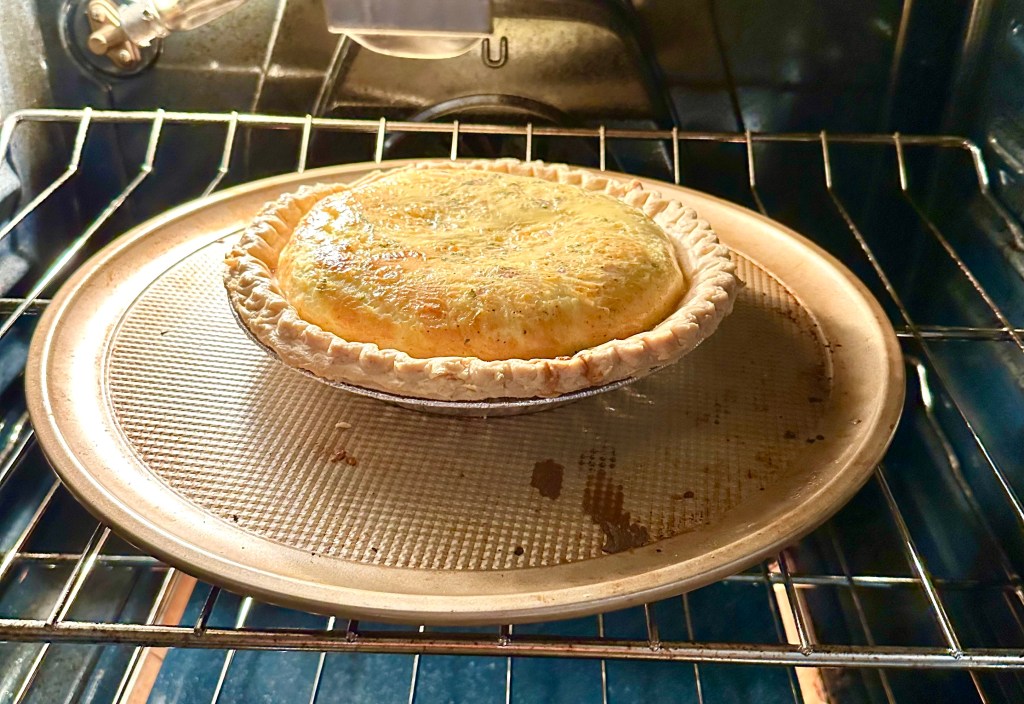
Put your cheese and filling of choice into your pie crust and gently pour the egg and cream mixture over the top and bake until the tart doesn’t wobble when gently shaken. That’s usually about 30 to 40 minutes. This is what it looks like when its ready.

Remove and allow to cool.

One-Pan Chicken and Vegetable Recipe

Sometimes it’s nice to have a dish that allows you to clean out the fridge and use up the bits and pieces. Having a one pan meal is always an advantage for easy clean up

This recipe is perfect for that, as you can substitute any root vegetable and change the herbs by whatever’s around. I’ll share my recipe here, but feel free to experiment.

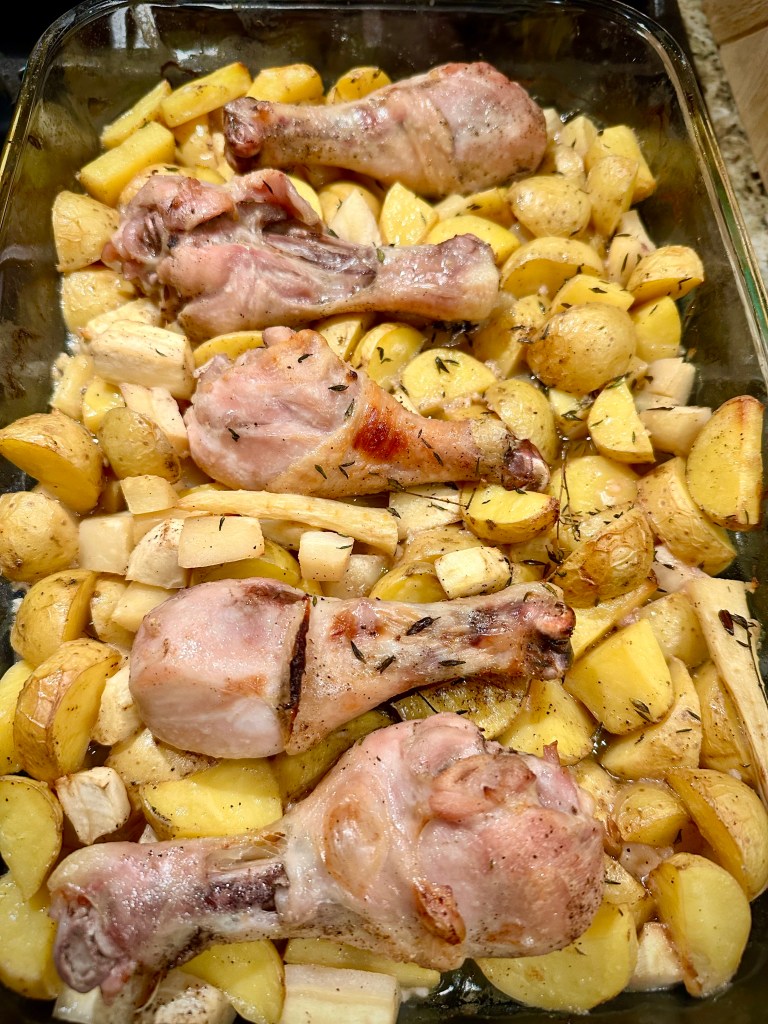
A glass baking dish filled with cooked chicken drumsticks placed on a bed of halved baby Yukon Gold potatoes and chopped parsnips, seasoned with herbs.

Ingredients:

1-2 lbs of Chicken, bone in. Whatever you prefer, but I had drumsticks. Thighs would also be very good.

Potatoes, halved. I used one bag of baby Yukon Gold.

3-4 Parsnips, peeled and chopped roughly. Carrots could work as well.

2-3 cloves of Garlic

1 cup Riesling. Again, you can sub wines here, but I find a slightly sweeter profile works well.

4 Tbsp Butter

5-6 springs of fresh Thyme. Rosemary or tarragon would be a good sub here.

Sat and Pepper

Preparation:

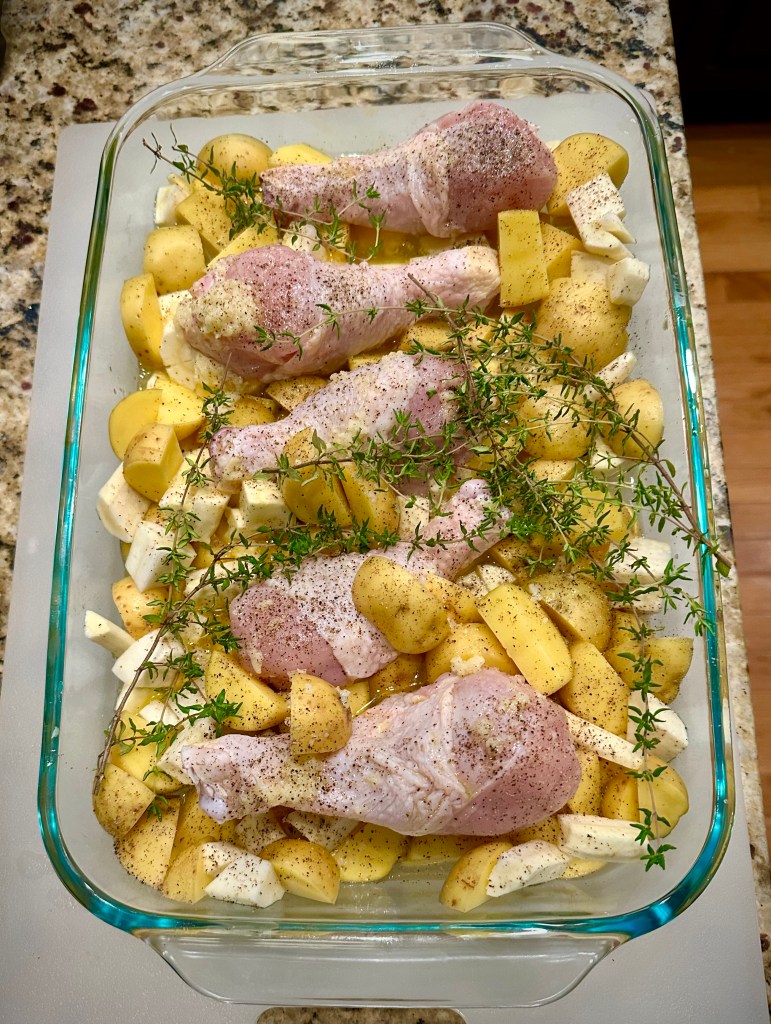
Preheat the oven to 400F/204C. Arrange the potatoes and parsnips in the pan and arrange the chicken, skin side up, on the top. Add generous salt and pepper.

A glass baking dish filled with seasoned chicken drumsticks on a bed of halved baby Yukon Gold potatoes and chopped parsnips, garnished with fresh thyme.

Melt the butter garlic and thyme together and pour over the chicken. Bake for 60-100 minutes until the chicken is done and nicely browned. Remove the chicken and give the vegetables a good stir and serve.

Note: If you feel the pan is getting too dry, just add bit more wine.

Pesto

Marcella Hazan is the chef that taught me how to cook authentic Italian. She was tough and demanded authentic ingredients and no short cuts, but the recipes are timeless and still work today as well as they did 30 years ago. If you want one cookbook on Italian cooking, you can’t go wrong with her classic, “Essentials of Classic Italian Cooking”.

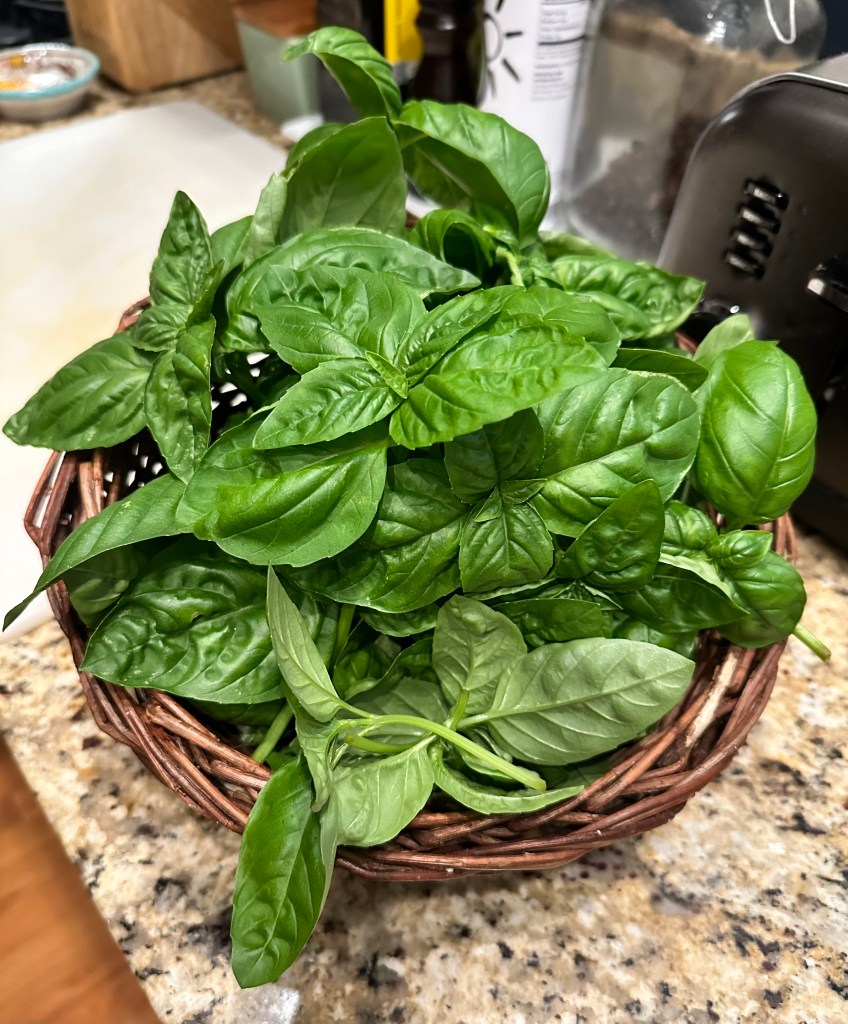
Summer is the perfect time to make pesto. With all the rain we’ve been having, my basil has been going crazy. There are many recipes for pesto, but I think Marcella gets the balance just right. I make a small change, because I’m not a huge fan of pine nuts. I’ve even seen authentic recipes from Genoa where they use walnuts, but I love pecans, so that’s my hack. Of course you can use whatever you prefer.

Additionally, while many pesto recipes do not use butter, I feel it gives a great flavor. It’s your choice. Finally, the mortar and pestle method is considered by many to be the best way to prepare pesto, but I have a method I use were I can use a mini prep processor and get excellent results. Again, your choice.

A close-up view of a wicker basket filled with fresh, vibrant Genovese basil leaves on a kitchen countertop.

Ingredients:

1 lb Pasta, I think fusilli, orecchiette or farfalle work well, as the ridges catch the pesto.

2 cups Genovese basil leaves, tightly packed, no hard stems.
1/4 – 1/2 cup Extra Virgin Olive Oil, you’ll need the 1/2 if you choose to skip the butter.
2 cloves Garlic, crushed with flat side of your knife and finely minced
1/2 tsp Sea Salt
2 Tbsp Pecans or Walnuts or pine nuts if you like them.

3 Tbsp Butter
3/4 cup finely grated Parmesan
1/4 cup finely grated Romano

Preparation:

Before you begin, take you food processor bowl including blade and top and pop it into the refrigerator. This will help you from overheating the pesto.

Put the salt, nuts and garlic and 1/4 cup of olive oil into the food processor and pulse until you get a smooth consistency. Then add your basil in in batches, just pulsing gently until fully incorporated. Transfer into a bowl and fold in the butter and cheese by hand until the mixture is smooth and cover and put into the refrigerator. It can start to blacken if left on the counter.

A food processor filled with freshly made green pesto, featuring a blend of basil, nuts, garlic, and olive oil, ready for use in pasta dishes.

Take your pesto out of the refrigerator. Start the water for pasta, once its boiling give it a heavy dash of salt. Add in your pasta. About 4 minutes before the pasta is done scoop out some hot pasta water and set aside.

Cook the pasta for another 2 minutes, drain and add the pasta back to the cooking pan. Add the pesto and a splash of the pasta water over very low heat and stir to coat the pasta for an additional 2 minutes. You may not need all of the reserved pasta water. Serve with additional cheese as desired.

Cajun Gumbo

Gumbo can be made so many different ways and books have been written about the different combinations. However, this is one of my favorite versions as it is smoky and dark. The flavor needs time to develop, so don’t try and rush it. The slower it cooks the better it will be.
 

A pot filled with a smoky, dark gumbo featuring chunks of sausage, chicken, and various vegetables, simmering on a stove.

The key to a great gumbo is the roux. Making a good roux is easy, if you follow the steps exactly and again don’t rush. Check back to the previous post on making a roux.

Always serve with freshly steamed white rice. I like to medium grain, as it gets nice and sticky. It seems to hold up better with gumbos and jambalayas.

Ingredients: 

3/4 cup of Vegetable Oil

3/4 cup of All Purpose Flour

2 large Onions, chopped

1 large Green Pepper, chopped

1 cup of Celery, chopped with the leaves included

1 lb. of Andouille or other smoked sausage, sliced into 1/2 inch pieces.

1 lb. Chicken, boneless skinless chicken thighs, cut into 2 inch cubes.

6 cups of hot Water or broth

1 Tbsp Salt, or to taste.

½ tsp. Cayenne pepper

3 Bay leaves

1 tsp. Thyme, or 3-4 sprigs of fresh Thyme

Lots of freshly ground Black Pepper

1 cup finely chopped Green Onions

1 Tbsp File Powder

Preparation:

Make a medium or dark roux, then add all the vegetables and spices and cook for 5 to 7 minutes. When the smell starts to fill the kitchen it’s ready.

Then add the sausage, and cook for another 5 minutes. Now add the hot water and bring it to a boil and then turn it down to medium low for 30 minutes.

Add the chicken and bring it back to a gentle boil and cook for an additional 1-3 hours. When the fat comes to the surface skim it off, otherwise your gumbo will be greasy.

Here’s a simple trick. Use a paper towel folded in half and then again and gently lay it on the surface and let it absorb the excess oil. Use tongs to take it out. Do as often as needed.

When you’re ready to serve it, take it off the heat and add the file powder and green onions. Let it sit for a few minutes and rest, then spoon into bowls on top of your white rice.

Gai Yang- Thai Grilled Chicken

This is the most wonderful marinated grilled chicken dish. It is a staple in Thailand on most any street corner and it is delicious. It is super easy to prepare and goes great with a salad and steamed rice.

I have also used it on pork (Moo Yang) and beef and it is just as good. The key is to use the best ingredients and make sure to let it marinade overnight.

Ingredients:

2 lbs of Chicken. I prefer boneless skinless thighs.

½ cup Coriander/Cilantro Roots or Stems. Roots can be hard to find, so stems will work perfectly.

6 cloves Garlic

1 Tbsp freshly ground Black Peppercorns

3 Tbsp Thai Fish Sauce

1 Tbsp Soy Sauce

2 Tbsp Oyster Sauce

1 Tbsp Sugar

1 Lime, juiced.

Dash of Vegetable Oil, helps the marinade adhere to the meat.

Preparation:

Grind your black peppercorns and then combine all ingredients into a mini food processor and blend into a smooth mixture. If you’re feeling adventurous, you can also use a mortar and pestle.

Pour over the meat and refrigerate for at least overnight. Then remove from marinade and grill until done. You can also roast them in the oven and an air fryer is particular good. Air fryer timing is 16-20 minutes at 375F. Turning once half way through cooking.

Serve with Thai Jasmine rice and Nam Pla Prik sauce or sweet Thai chili sauce.

Homemade Chicken Stock

Yes, stocks can be time consuming, but there are so many variations and the quality is vastly better than anything from the market. It is liquid gold indeed.

You will need a large heavy grade stock pot for this to work properly. If you don’t have one, then it’s a good time to invest.

Every time I chop vegetables like carrots, onions and celery, I always tend to cut a bit off, or peel them, but I save the scraps and freeze them for making stock. Yes, even the onion skins. Any left over chicken bones can also be frozen. The addition of the onion skins gives the stock a beautiful golden color.

A large stock pot filled with simmering chicken stock, including chunks of chicken, onion, garlic, celery, and black peppercorns.

In this recipe, I roasted a whole chicken and then after stripping away the meat, I used the carcass to make the stock. Literally, I got roasted chicken for dinner for one night, meat for chicken salad or sandwiches and now stock.

Ingredients: 

1 Whole Chicken, keep the neck, but remove the giblets if included. As mentioned, I like to roast the chicken to really bring out the flavor.

2 Carrots, roughly chopped

2 Celery stalks, leaves and all, roughly chopped

2 medium Onions cut in quarters. Skins on.

3-4 cloves of Garlic, left whole.

2 Bay Leaves

10 Black Peppercorns

A few springs of fresh Thyme

Preparation:

If you’re using a roasted chicken, when you’re ready to make your stock, strip off all the meat and set aside for other uses. pull apart the chicken carcass into pieces and put all ingredients into the stock pot, adding any of the frozen bits (vegetable scraps and random bones) you’ve stashed away.

Add enough water to cover the chicken. Bring to a low boil and then drop the heat and gently simmer covered with the lid slightly ajar for 8-14 hours. Throughout the process, it helps to skim off the scum that comes to the surface. The longer you can cook the better and richer your stock will be.

A close-up of a large stainless steel stock pot filled with homemade chicken stock, featuring pieces of meat, vegetables, and herbs floating in the liquid.

After allowing the stock to cool, strain it. I find two mesh strainers work well, or you can also use a strainer with some cheesecloth.

A close-up image of a clear chicken stock in a glass bowl, with a slight sheen on the surface, resting on a kitchen countertop.

Then cool thoroughly before either freezing or refrigerating in a covered storage container. I find that removing the excess fat that gathers on the surface really keeps the stock clear and gives a better mouthfeel.