Rigatoni with Sausage and Basil

This is such an easy pasta to throw together and so rich and satisfying. Sometimes less is more and the basic ingredients can really sing when left to their own devices.
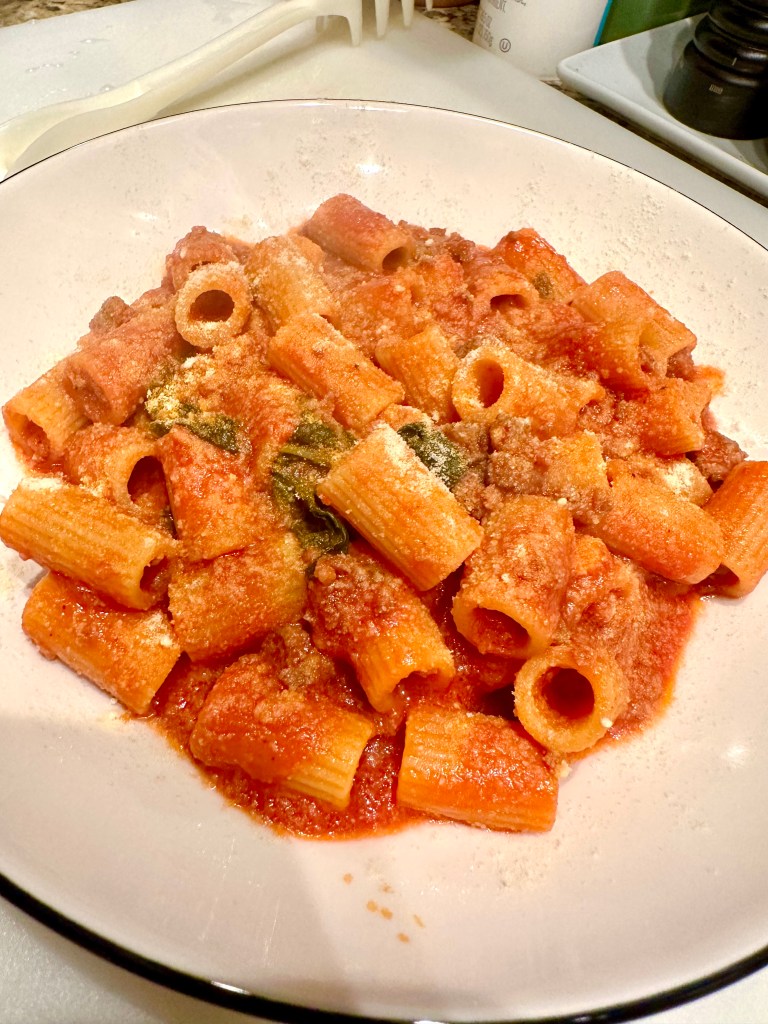
A bowl of rigatoni pasta topped with a rich tomato sauce, sprinkled with grated Pecorino Romano cheese and garnished with fresh basil.

Ingredients:

6 Italian Sausages, cubed, seared and drained. 

1 lb of Pasta, tube like rigatoni is ideal

2 Tbsp Olive oil
1/4 tsp Oregano 
1 Onion, minced
1 Carrot, minced
4-5 cloves Garlic, crushed with side of knife. 
1-24 oz bottle of Passata 
1 Bay Leaf

Fresh Basil 
Pecorino Roman

Preparation:

Remove your sausage from its casing, and cube it, sear it in a pan until it starts to release some of its fat and break in into smaller pieces, then drain it. 

To the same pan add your onion and garlic, and allow it to sauté and soften. Add back the sausage and your passata, bay leaf, oregano and cook for at least one hour. Then add your fresh basil and allow it to continue cooking until the oil separates. I prefer to add the basil later, as I feel if it cooks too long it loses flavor.
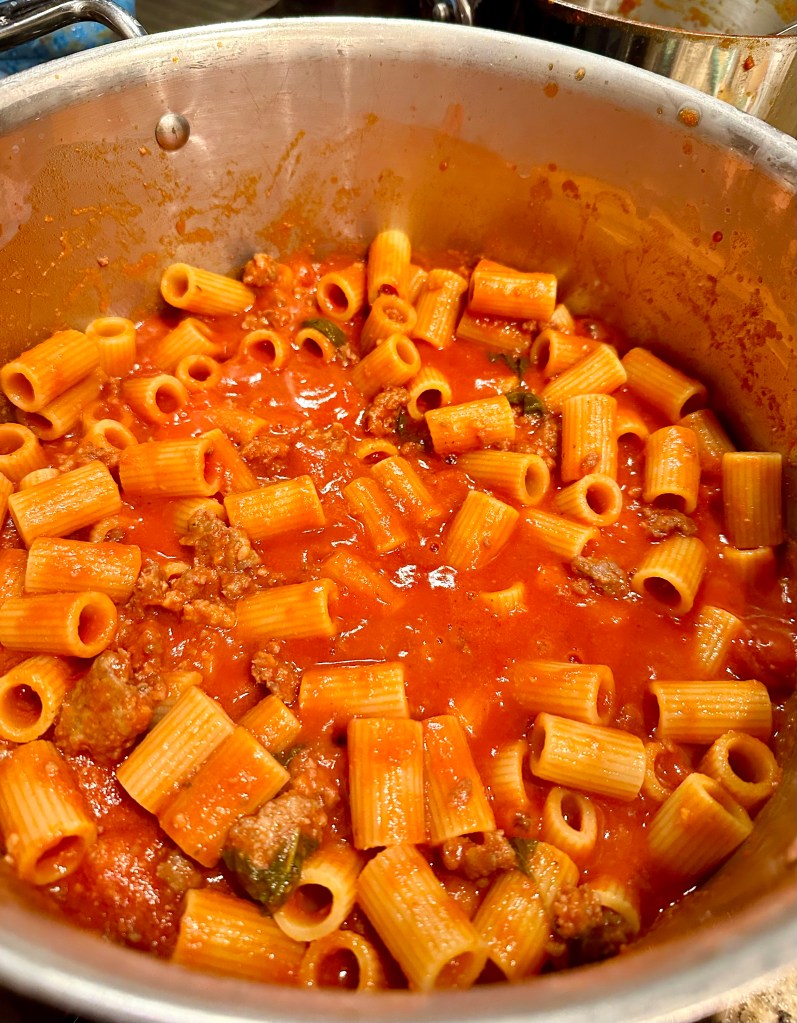
A pot filled with rigatoni pasta mixed with Italian sausage in a rich tomato sauce, garnished with fresh herbs.

Before you drain your pasta, remove about 1/2-3/4 of a cup of the pasta water. Drain your pasta and add it back to the pan with the reserved pasta water and allow it to finish cooking.

The addition of the pasta water really creates a silky sauce and will vastly improve the final dish. I find this to be true for most pasta dishes. I finished with grated Pecorino Romano cheese.
Pesto

Marcella Hazan is the chef that taught me how to cook authentic Italian. She was tough and demanded authentic ingredients and no short cuts, but the recipes are timeless and still work today as well as they did 30 years ago. If you want one cookbook on Italian cooking, you can’t go wrong with her classic, “Essentials of Classic Italian Cooking”.

Summer is the perfect time to make pesto. With all the rain we’ve been having, my basil has been going crazy. There are many recipes for pesto, but I think Marcella gets the balance just right. I make a small change, because I’m not a huge fan of pine nuts. I’ve even seen authentic recipes from Genoa where they use walnuts, but I love pecans, so that’s my hack. Of course you can use whatever you prefer.

Additionally, while many pesto recipes do not use butter, I feel it gives a great flavor. It’s your choice. Finally, the mortar and pestle method is considered by many to be the best way to prepare pesto, but I have a method I use were I can use a mini prep processor and get excellent results. Again, your choice.

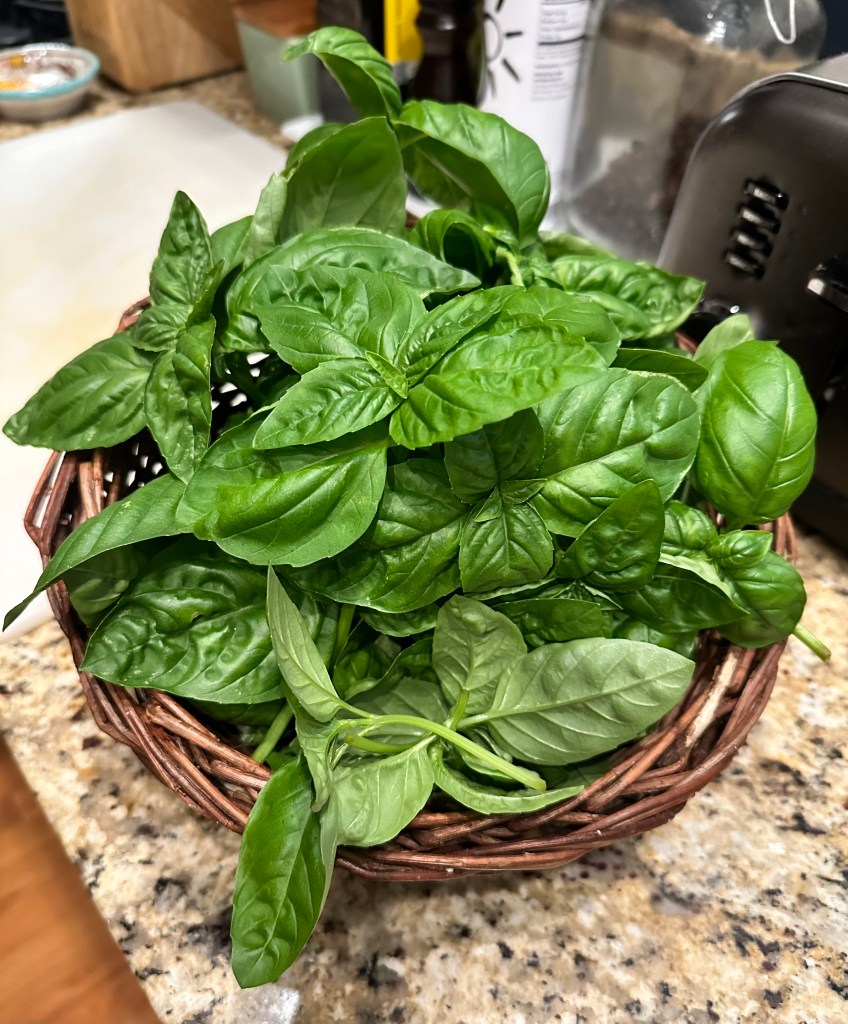
A close-up view of a wicker basket filled with fresh, vibrant Genovese basil leaves on a kitchen countertop.

Ingredients:

1 lb Pasta, I think fusilli, orecchiette or farfalle work well, as the ridges catch the pesto.

2 cups Genovese basil leaves, tightly packed, no hard stems.
1/4 – 1/2 cup Extra Virgin Olive Oil, you’ll need the 1/2 if you choose to skip the butter.
2 cloves Garlic, crushed with flat side of your knife and finely minced
1/2 tsp Sea Salt
2 Tbsp Pecans or Walnuts or pine nuts if you like them.

3 Tbsp Butter
3/4 cup finely grated Parmesan
1/4 cup finely grated Romano

Preparation:

Before you begin, take you food processor bowl including blade and top and pop it into the refrigerator. This will help you from overheating the pesto.

Put the salt, nuts and garlic and 1/4 cup of olive oil into the food processor and pulse until you get a smooth consistency. Then add your basil in in batches, just pulsing gently until fully incorporated. Transfer into a bowl and fold in the butter and cheese by hand until the mixture is smooth and cover and put into the refrigerator. It can start to blacken if left on the counter.

A food processor filled with freshly made green pesto, featuring a blend of basil, nuts, garlic, and olive oil, ready for use in pasta dishes.

Take your pesto out of the refrigerator. Start the water for pasta, once its boiling give it a heavy dash of salt. Add in your pasta. About 4 minutes before the pasta is done scoop out some hot pasta water and set aside.

Cook the pasta for another 2 minutes, drain and add the pasta back to the cooking pan. Add the pesto and a splash of the pasta water over very low heat and stir to coat the pasta for an additional 2 minutes. You may not need all of the reserved pasta water. Serve with additional cheese as desired.

Savory Sausage and Roasted Pepper Sauce Recipe

This sauce is packed with flavor. The roasted peppers complement the Italian sausage well. I like to use a mix of peppers, but I find that green bell peppers are too bitter, so I omit them.

A pot of flavorful red sauce simmering with chunks of Italian sausage and bay leaves, showcasing a rich tomato base.

The only slightly time consuming part is the prep of the peppers, but if you do a few extra, you can use them for multiple dishes like salads and sandwiches. 

Ingredients:

3 Bell Peppers, red, yellow and orange 

2 Tbsp Olive oil

Oregano 

6 Italian Sausages, mild or spicy, cubed, seared and drained. 

1 Onion, minced

1 Carrot, minced

1 stalk Celery, minced

4-5 cloves Garlic, crushed with side of knife. 

1 24 oz bottle of Passata 

1 Bay Leaf 

Pecorino Romano

Preparation:

Preheat your oven to 375°F, cut your peppers in half, and take away the stems. Place them on a baking sheet with parchment paper skin side down and brush them with olive oil and sprinkle them with salt, pepper and a pinch of oregano. Bake them until well roasted. It usually takes about 35 to 40 minutes. Remove them and allow them to cool.

Remove your sausage from its casing, and cube it, sear it in a pan until it starts to release some of its fat and then drain it. 

To the same pan add your onion, carrot, and celery and garlic, and allow it to sauté and soften. This is your soffritto. 

Add back the sausage and your passata and bay leaf and cook for at least one to two hours.

Serve with pasta of your choice, but tube pasta is a good option. I finished with grated Pecorino Romano cheese.

Pasta alla’Amatrice

This was a speciality of Florence’s in Boston’s North End. Sadly Florence passed away and the original restaurant closed in 2015. I like the idea of keeping the dish alive. I’ve heard they’ve reopened as the Florentine Cafe.


After I moved away from Boston, I tried to recreate Florence’s recipe, and I think this is very close to the original. This sauce can be made thicker and more concentrated by just using one can of tomatoes. It’s your choice.
 
For the purists, they would likely disagree that this is the famous pasta from the town of Amatrice. However I like both. If you want to sample the “real” dish from Amatrice, here is a link. https://www.ciaoitalia.com/seasons/season-2300/episode-2316/pasta-allamatrice

Ingredients:

 
1 large finely chopped Onion
5 cloves of Garlic, finely chopped
½ lb. Pancetta (Italian Slab Bacon), either cut into ¼ inch cubes or ¼ inch strips 
2- 28 oz. cans of crushed Tomatoes, or whole tomatoes that are lightly chopped in the processor. San Marzano’s are the best.
3 tsp. Red Pepper flakes or a few whole red chili peppers – Optional
2 Tbsp. Butter
Few grindings of fresh Nutmeg
Salt and freshly ground Black Pepper
Grated Romano and/or Parmesan Cheese
Pasta of choice. Bucatini is traditional, but I use penne.
 
Preparation:
 
Melt the butter over medium heat, and add the pancetta. After the pancetta starts to release it’s aroma and renders down, add the onion, garlic, and cook until translucent. 
 
Now add the nutmeg, red pepper flakes and the salt and pepper. You want to just let the mixture sauté gently until it smells fantastic, usually about 5 to 10 minutes over medium heat. 
 
Then add the tomatoes, bring it back to a simmer, and let it slowly cook. After 1 to 2 hours, you will have an amazing rich sauce, which is perfect with any tube pasta. Florence always served it with penne, so I do the same. 
 
Before you add the sauce, always sprinkle your grated cheese over the drained pasta, toss and then add the sauce and toss again, and then add more Parmesan cheese. Tossing is the key to a well-made pasta dish.